


Why Penn State?

Balance serious music study with enriching student experiences that prepare you for a career. At Penn State, you will find the ideal match between the wealth of opportunities found in a B1G university and the individualized attention provided in the intimate environment of our School of Music.
Students choose from a wide range of areas of study and benefit from individualized instruction by dedicated faculty whose teaching and performance experience spans the world. Both majors and non-majors have the opportunity to participate in numerous ensembles, ranging from small chamber groups to the marching Blue Band.
The Penn State School of Music – pursue your passion, nurture your talent, and prepare to take on the world.
Flute Studio- What to Expect?
-

Applied Flute Lessons
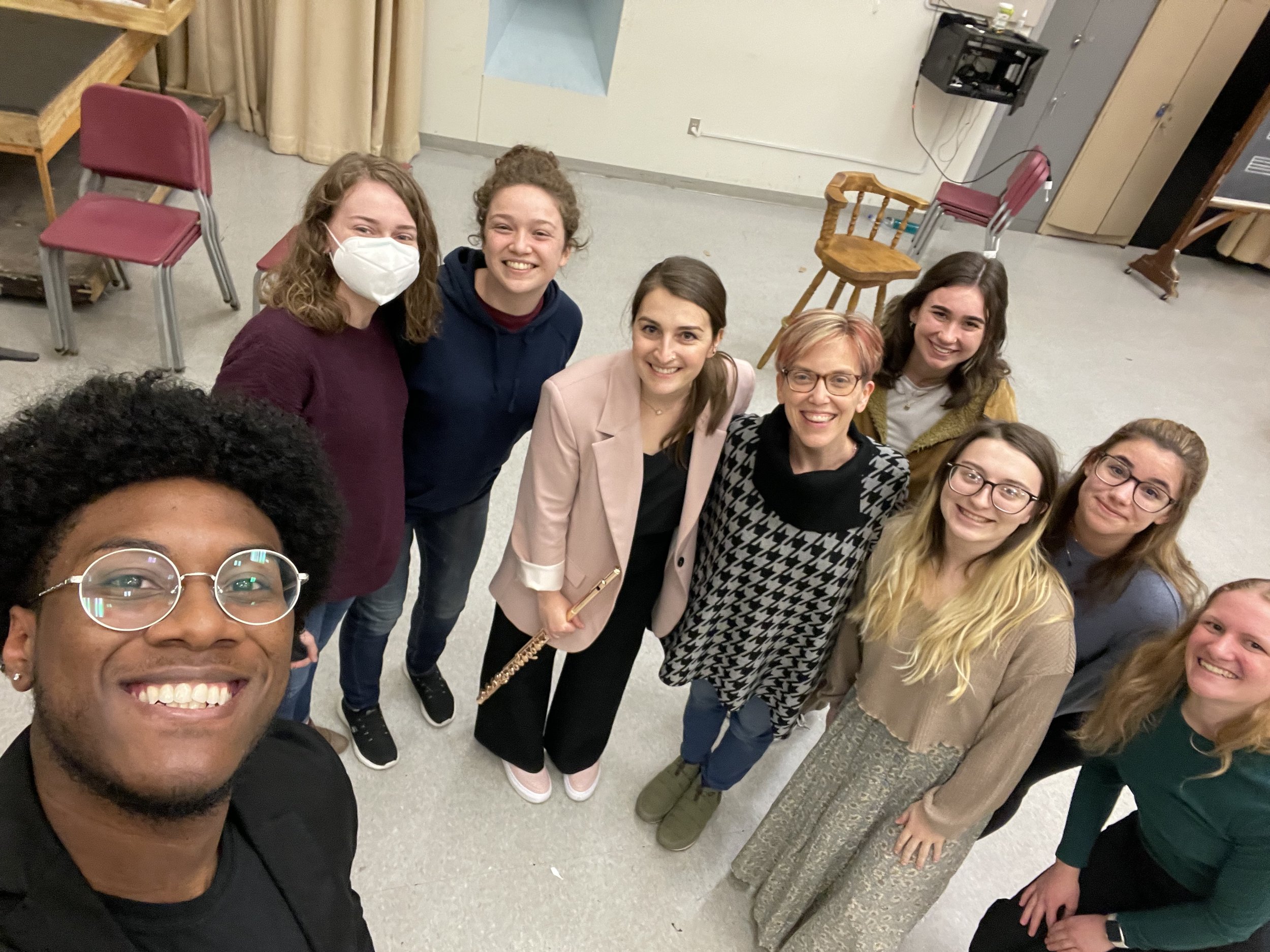
The flute studio is made up of undergraduate and graduate music education and performance majors as well as students in the music minor degree program. Each student in the Penn State flute studio will be offered an hour-long weekly private lesson with Dr. Seidman.
Music majors today plan a wide variety of careers, including working as band directors, rock stars, music therapists, business-owners, music historians, composers, repair and flute design technicians and concert flutists. At Penn State Dr. Seidman, emphasizes the critical mentoring role played by a teacher. During your study at Penn State University, she will help you realize your hopes and dreams for the future.
-

Flute Choir
The Penn State Flute Choir presents a unique opportunity for students to learn basic advanced chamber music skills. The ensemble is open to majors, minors and non-majors alike; and enrollment is by audition with Dr. Seidman. The Flute Choir performs music from a vast repertoire of original works and transcriptions of classical standards. The students perform with and without a conductor and spend time working on cueing, blending, intonation, musicality, playing solos and accompaniments and working with others in a fun and challenging environment. Students are also encouraged to become acquainted with the auxiliary instruments of the flute family. In 2013 and 2015 The Penn State Flute Choir was invited to perform at the National Flute Association Convention annual meeting. The Penn State Flute Choir rehearses in the Spring semesters and is under the direction of Dr. Seidman.
-
Guest Artists
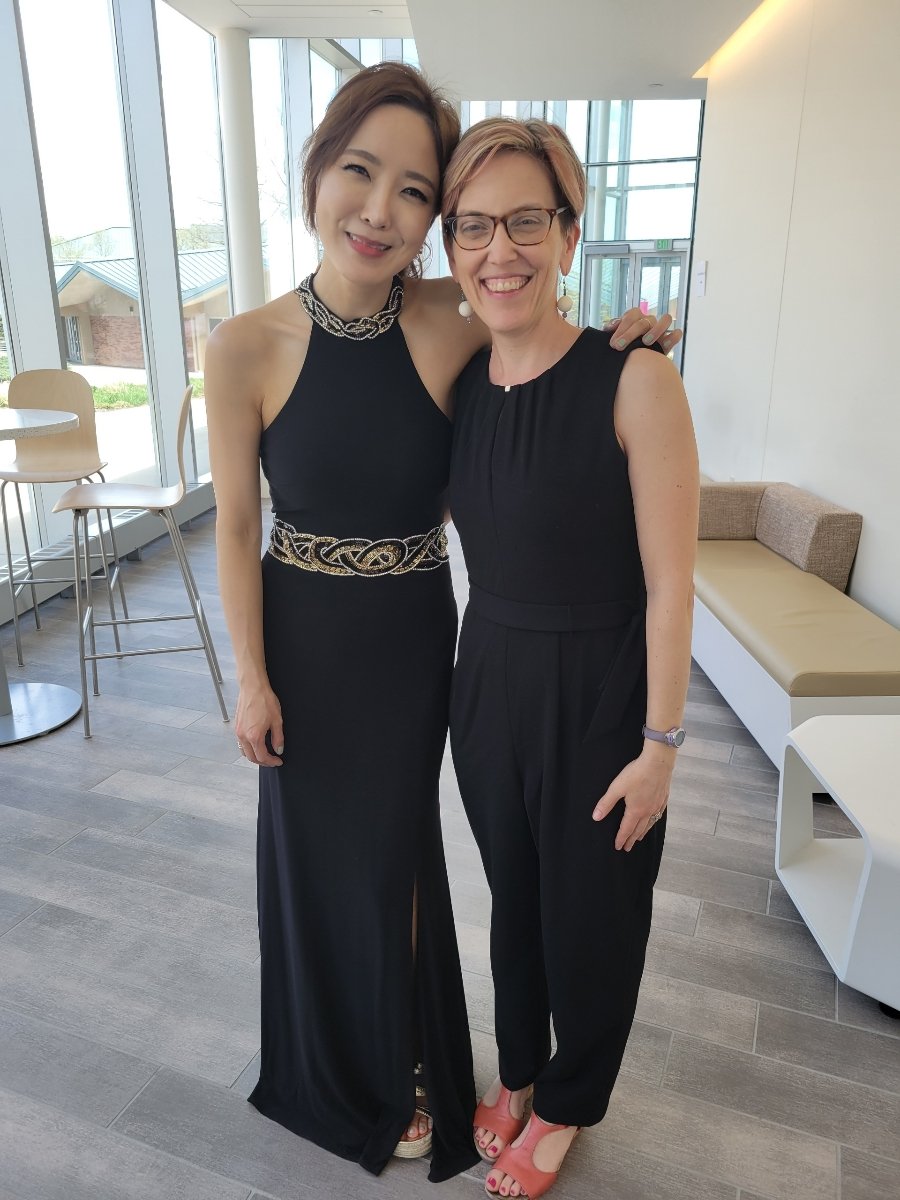
Every semester, Dr. Seidman invites professional flutists to come to the Penn State campus to give recitals and master classes. Some guest artists from the past couple of years include
Jasmine Choi, Mimi Stillman, Marianne Gedigian Bonita Boyd, Christina Jennings, Maxim Rubtsov, Gergely Ittzés, Lorna McGhee, Bart Feller, and Keith Underwood.
-

Studio Class
Dr. Seidman also teaches a flute studio class. Topics addressed in these classes deal with technique and performance. This meeting time also offers a performance opportunity for studio members to perform for each other and learn how to offer constructive feedback building stronger studio camaraderie.
Student Experience
-
My experience within the Penn State Flute Studio transformed my undergraduate experience. Dr. Seidman was invested in my growth as both a flute player and musician. Whenever I needed another ear, or just had a question, Dr. Seidman was always there to help. She taught me new approaches to practice, music, and collaboration. The skills learned in my flute lessons made me a better student and teacher. Beyond lessons, our studio class gave me a safe and encouraging space to try new things, and learn from my peers. The members of the studio helped me feel welcomed and excited to learn. Dr. Seidman’s studio truly helped me thrive both during college and now in post-grad life. Nehama Dormont, Class of 2023
-
The Penn State School of Music and its faculty have played such a huge role in my musical upbringing, and my time as a student there will be something I always cherish. After finishing my undergraduate studies in flute performance with Dr. Eleanor D. Armstrong, I had the privilege to continue studying at the graduate level with Dr. Naomi Seidman. Dr. Seidman is an incredibly challenging and kind teacher, and she is absolutely the reason I continued on to get a doctorate in flute. She holds her studio members to the highest standard while also fostering a supportive and collaborative environment. She encouraged me in so many ways and believed in my ability to become a professional musician before I ever dreamed that could be my path. I feel honored to call her one of my mentors and value her friendship tremendously. Dr. Laura Zabanal, Class of 2014
-
I am Brenna Sherman, and I completed my Master of Music degree at Penn State University in 2023 with Dr. Naomi Seidman. Reflecting on my time at Penn State, I can confidently say that studying music and the flute there was an outstanding decision. The environment was enriched by exceptionally talented professors and peers, many of whom have become lifelong friends.
The flute studio and lessons with Dr. Seidman were particularly impactful. Her ability to tailor each lesson to my needs and to challenge me effectively contributed greatly to my growth as a flutist. I am deeply thankful for her guidance and the opportunities she provided, both during my studies and beyond. The supportive and dynamic atmosphere of the flute studio played a significant role in my education, and the connections I made continue to be valuable.
The experiences and relationships forged at Penn State are ones I will always cherish. Dr. Seidman and the other faculty members were not only exceptional educators but also incredibly kind and wise individuals who have left a lasting impression on me. The impact of their mentorship and the camaraderie of my peers continue to inspire and motivate me in my musical journey. My time at Penn State was transformative, shaping not only my professional skills but also my personal growth. I am profoundly grateful for the enduring legacy of support and excellence that Penn State has provided, and I look forward to carrying these invaluable lessons and connections with me throughout my life. Brenna Sherman, class of 2022
-
My experience in The Pennsylvania State University Flute Studio was nothing short of enriching. Dr. Seidman offers a learning experience that is both thorough and diverse. Being a part of the studio left me feeling fulfilled with the progress I made playing the flute and piccolo, improving my general musicianship, and increasing my overall knowledge about the world of music. I cannot recommend coming to study with Dr. Seidman at Penn State enough. She will inspire, motivate, and educate you to become the best flutist, teacher, and person that you can be.” Kevin Palm, Class of 2023
Teaching Philosophy
I am continually inspired, invigorated and fascinated by my students. I mentor and guide my students, regardless of their level or background, to recognize and accomplish the highest levels of flute playing and musicianship within themselves. Although the journey will be different for each student, all will master the flute fundamentals such as embouchure, breathing, vibrato, intonation, hand position, and posture. While we develop your flute fundamentals we will work on a variety of repertoire.
I encourage my students to pick repertoire that they can see themselves in, and therefore are inspired to work on, while still representing the many different time periods of music written for the flute. Research into diverse repertoire leads to inspiring capstone projects that reflect a personal journey in musicianship.
My flute studio is inclusive, encouraging, diverse, active and this is shown by the diversity of my teaching methods, strong studio camaraderie (we are all in this together), repertoire studied, the outside guests that come and share their expertise, and the multitudes of opportunities I strive to provide for my students: performances, competitions, outreach events, to name only a few.

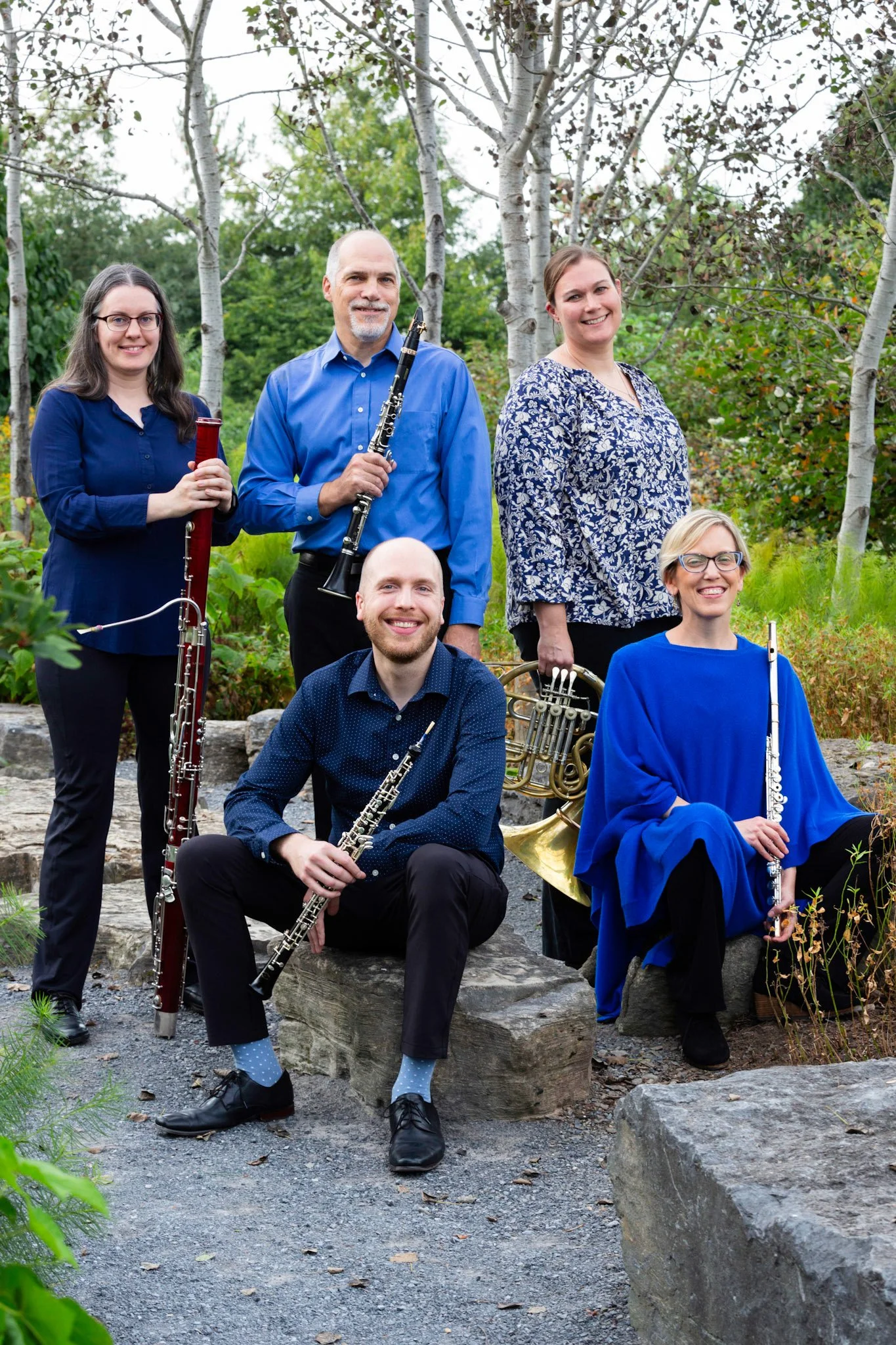
The Penn State Studio Presents Flute Day 2024 with Zawa!
DATE: FEBRUARY 25, 2024 TIME: 1:00 P.M. – 6:30 P.M.

FEATURING:
CLAUDIA ANDERSEN, JILL FELBER, ANGELEITA FLOYD, AND GINNY BROFFIT-KUNZER
WE ARE SO EXCITED TO ANNOUNCE OUR FIRST-EVER FLUTE CHOIR-FOCUSED PENN STATE FLUTE DAY! THIS EVENT WILL NOT ONLY CELEBRATE ZAWA! AND FRIENDS BUT WILL ALSO GIVE FLUTISTS OF ALL LEVELS AND EXPERIENCE THE OPPORTUNITY TO CONNECT WITH EACH OTHER ON PERSONAL, PROFESSIONAL, AND MUSICAL LEVELS. THIS EVENT IS FREE AND OPEN TO THE PUBLIC. THANK YOU TO THE GENEROUS SPONSORSHIP OF THE PENN STATE SCHOOL OF MUSIC AND THE UNIVERSITY PARK ALLOCATION COMMITTEE.
Schedule of Events: All events are free and open to the public
1:00-1:50pm: Warm up with Dr. Ginny Broffitt-Kunzler (Recital Hall)
2:00-2:50pm: Flute Choir Rehearsal/Reading Session with Dr. Angeleita Floyd (Recital Hall)
3:00-4:30pm: Masterclass with Jill Felber, Claudia Anderson, and Angeleita Floyd (Esber)
4:30-5:15pm: Keep Your Flute in Good Shape, workshop with Windworks Studio (Esber)
5:30-6:30pm: Recital: ZAWA! and FRIENDS ~ Joint Flute Choirs conducted by Angeleita Floyd (Recital Hall)
Click HERE to download music for the flute choir reading session and final public performance.
EXCITING REPERTOIRE:
ZAWA! will perform Winds for Change by Cynthia Folio. Here is more information on this awesome piece:
WINDS FOR CHANGE, a musical meditation on the effects of climate change and the environment (accompanied by optional video and live manipulation of the flutes), was ZAWA’s idea. My musical relationship with ZAWA! goes back to 2008, when I wrote Z3 (for two flutes and piano: I. Zephyr, II. Zenith, III. ZAWA!) for them. In six consecutive sections, Winds for Change begins with simulated wind sounds, giving the impression that the flutes (alto here) are coming from a great distance onto the stage. Entitled “Canyon Winds,” it captures the vastness of the Canyon Lands—a historical landscape that goes back to the Anasazi Indians. The “Hazy Sunrise” section begins in the Canyon Lands but could easily apply to major cities around the world, where pollutants in the air obscure the sun. The orchestra creates a high-pitched, vague texture. “Morning Mist” introduces raindrops in the orchestra and flutes, which trigger electronic raindrops. This grows into the “Summer Storm,” in which the seemingly innocent drizzle turns into a serious hurricane, tsunami, or other natural disaster. Accelerates into “Glacier Calving”— an event becoming more common and dramatic—is almost completely improvised, by both soloists and orchestra. The thunder sheet, used to evoke thunder in the storm, now represents the crash of a large glacier falling into the water. An electrifying flute cadenza follows, gradually winding down as a transition to the calm final section, “Ocean Spirits.” An ocean drum opens this section and evokes a mixed mood of hope and sorrow. It features recorded whale sounds at the beginning and dolphin sounds at the end, suggesting a plea to protect our waters and our earth. Near the end, the flutes quote an American Shape-Note hymn, “Arkansas,” whose text is: “I’ll launch my boat upon the sea; this land is not the land for me.”
Frequently Asked Questions
-
When preparing for your studies at Penn State it may be a good idea to review your theory fundamentals. There are some great websites that are free such as http://www.teoria.com/ that are really helpful.
Required Texts For Applied Flute Lessons:
• Taffanel and Gaubert 17 Daily Exercises ($28 from Flute World online)
• Trevor Wye’s Omnibus ($35.96 from Flute World Online)
• Berbiguier 18 Etudes ($8.96 from Flute World Online).
• Solo repertoire: Will be decided upon once the semester gets started and I get to know your playing better!If you want to pick these texts up over the summer that would get you a head start on your first semester.
Don’t hesitate to contact me with any questions!
Sincerely,
Dr. Seidman -
All interested flute majors are invited and encouraged to take a lesson with Dr. Seidman and learn what the Penn State Music Department has to offer. Visiting the campus before you decide to audition is a great way to get to know Penn State!
-
UNDERGRADUATE
To prepare for the audition, students should choose works that they feel represent them at their best. The audition faculty would like to hear contrasting materials that show both technical facility and music expressiveness. This may be two different pieces (solos or etudes), or two movements of a large work. In addition, students should be prepared to play all major scales in two octaves, either slurred or tongued upon request, and the chromatic scale from low C up and down three octaves. For more information please contact:Instructor: Dr. Naomi Seidman
(814) 865-0175 – studio
nks11@psu.eduTo schedule an audition please go to the link below: https://arts.psu.edu/visit
GRADUATE
For admission to the Master of Music program in Flute Performance, please prepare the following:
Repertoire: Auditionees for the M.M. in Performance or the Professional Performance Certificate should prepare the following: •Mozart Concerto in G major, KV 313 (first movement exposition only) •One solo work (flute alone) from the 21st century •Two movements from a sonata/concerto from the 20th century •Two movements from a Baroque sonata •Two orchestral excerpts of your choice. Demonstration of memory is strongly recommended.Instructor: Dr. Naomi Seidman
(814) 865-0175 – studio
nks11@psu.eduFor how to apply to the graduate program please go to the link below:
http://music.psu.edu/prospective/gapply.html -
PPC participants have included students in all performance areas from both the US and abroad. Penn State’s PPC can be a particularly good option for foreign students as there is no academic work and no TOEFL requirement. For more information regarding the PPC please contact:
-
Taffanel and Gaubert 17 Daily Exercises Trevor Wye’s Omnibus
Berbiguier 18 Études
Beatboxing and Beyond (by Nicole Chamberlain and Dr. Mary Matthews)
Solo repertoire: Will be decided upon once the semester gets started and I get to know your playing better!